
Blog
Cybersecurity Threats to Watch in 2026: A Business Guide

Digital risks are no longer isolated incidents. As global automation trends accelerate, cyberattacks are following suit — becoming scalable, industrialized operations. What once required coordinated teamwork — victim selection, custom code development, phone calls, and lengthy social engineering dialogues — has transformed into an assembly line. Today’s attacks are mass-produced, lightning-fast, and alarmingly cheap.
Identity: The Primary Attack Vector
The target of most cybercriminals no longer lies in complex technical vulnerabilities but in compromising digital identity. Year after year, reports from Verizon and Mandiant M-Trends paint the same picture: credential theft remains the cheapest and most effective way to gain system access.
Passwords, tokens, cookies, browser data, and password manager contents are actively harvested through infostealers and malicious extensions. In 2026, the situation intensifies as even the classic password + MFA (Multi-Factor Authentication) combination is increasingly bypassed — not through brute force, but through session data theft, account recovery procedure exploitation, and help desk social engineering.
The reality is stark: it has become easier for attackers to convince systems they are legitimate users than to break through technical defenses.
Industries Under Maximum Pressure
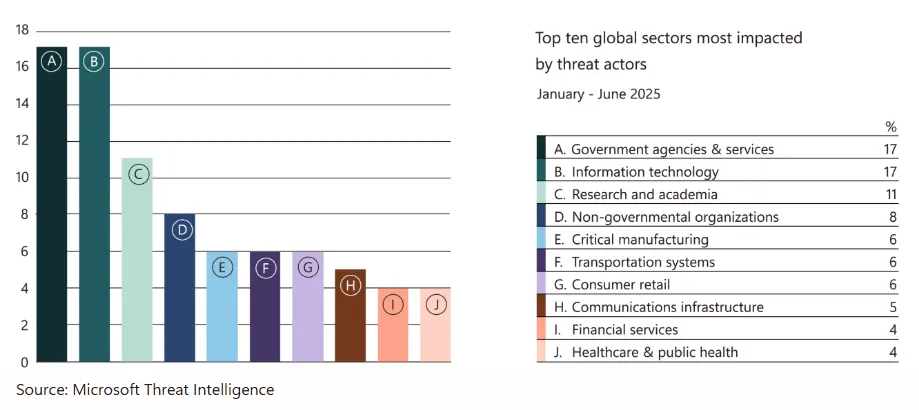
Industries handling large volumes of sensitive data continue to face the most intense attacks. According to the Microsoft Digital Defense Report, the most targeted sectors include government institutions (17%), scientific and educational organizations (11%), transportation systems (6%), financial services (4%), and healthcare (4%).
The reason for this prioritization is obvious: high data value and operational criticality. In these scenarios, traditional authentication steps prove insufficient. When an attacker can possess login credentials, passwords, and even email access, businesses need an additional, more reliable layer of identity verification.
In such situations, biometric verification becomes a logical barrier for sensitive operations — payments, credential changes, customer data access, and administrative actions.
Financial Motivation Drives Attacks
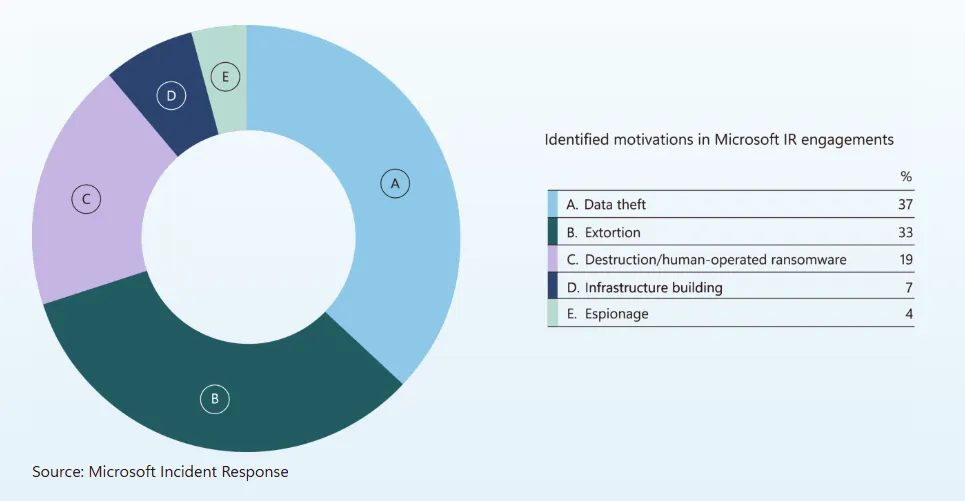
Most attacks in 2026 will continue to be financially motivated. Extortion and data theft remain the primary drivers of cybercrime. According to Microsoft data, data theft accounts for approximately 37% of all incidents.
The problem is that traditional defense methods are too vulnerable in this model. Passwords can be stolen, tokens intercepted, SMS messages spoofed, and employees convinced. Biometrics fundamentally changes the attack structure. Stealing biometric data remotely is significantly more difficult and expensive, and in many scenarios, practically unfeasible. This shifts attackers’ focus toward less protected organizations and reduces the likelihood of targeted attacks on companies with mature biometric identification systems.
Artificial Intelligence: A Force Multiplier for Both Sides
Research from Techwire emphasizes that AI is becoming a critical element in all modern processes — for both attackers and defenders. It equally empowers those who attack and those who protect.
On one hand, AI enables analysis of data at inhuman scales, detection of early attack indicators, and response times measured in minutes or even seconds. Automated systems can immediately block accounts, initiate access resets, and notify security teams almost instantaneously.
On the other hand, the same technologies are weaponized by attackers. Deepfakes, voice cloning, and synthetic videos are already deployed in attacks against international corporations and government entities.
AI also enables automation of the entire attack lifecycle — from reconnaissance to vulnerability exploitation at scale. Attacks become mass-produced, rapid, and inexpensive, dramatically increasing their volume. In these conditions, defense based exclusively on employee vigilance or manual processes becomes obsolete.
Biometrics in this context becomes one of the few factors difficult to forge even with AI, especially when properly implemented with anti-AI attack protections, deepfake detection, and liveness verification.
Regulatory Pressure and the Push for Reliable Identity
By 2026, regulatory focus on reliable user identification is intensifying. Requirements for customer authentication, personal data protection, and fraud prevention are tightening across Europe and other regions, including Central Asia.
ENISA (European Union Agency for Cybersecurity) and European regulators increasingly view multi-factor and biometric identification as necessary standards for fintech, e-government, and high-risk digital services. Even countries where biometric solutions were recently considered exotic are beginning to implement them at governmental and mandatory levels.
The reason is simple: biometrics allows elevation of trust in digital identity without creating excessive user friction. In a world where data substitution becomes the norm, it gives businesses a chance to maintain balance between security, convenience, and compliance.
The new year brings not new threats
But growing scale of old problems — amplified by automation and AI.
The battle for control over human identity moves to the forefront, and defenses that ignore this fact inevitably fail. Biometrics represents a key element of a sustainable strategy in this landscape. It raises attack costs, reduces dependence on compromised factors, and helps businesses build more reliable digital identity in a world where trust becomes the scarcest resource.
Work With Biometric.Vision
Ready to take your business to the next level? Scale confidently with Biometric.Vision's digital face registration. Fast. Simple. Secure.
Fast. Simple. Secure.
Request a Demo