What is KYC and How It Works: The Essence of Modern Personal Identification Systems
Learn what KYC (Know Your Customer) means, how modern identity verification works, and why it matters in digital onboarding, fraud prevention, and compliance.

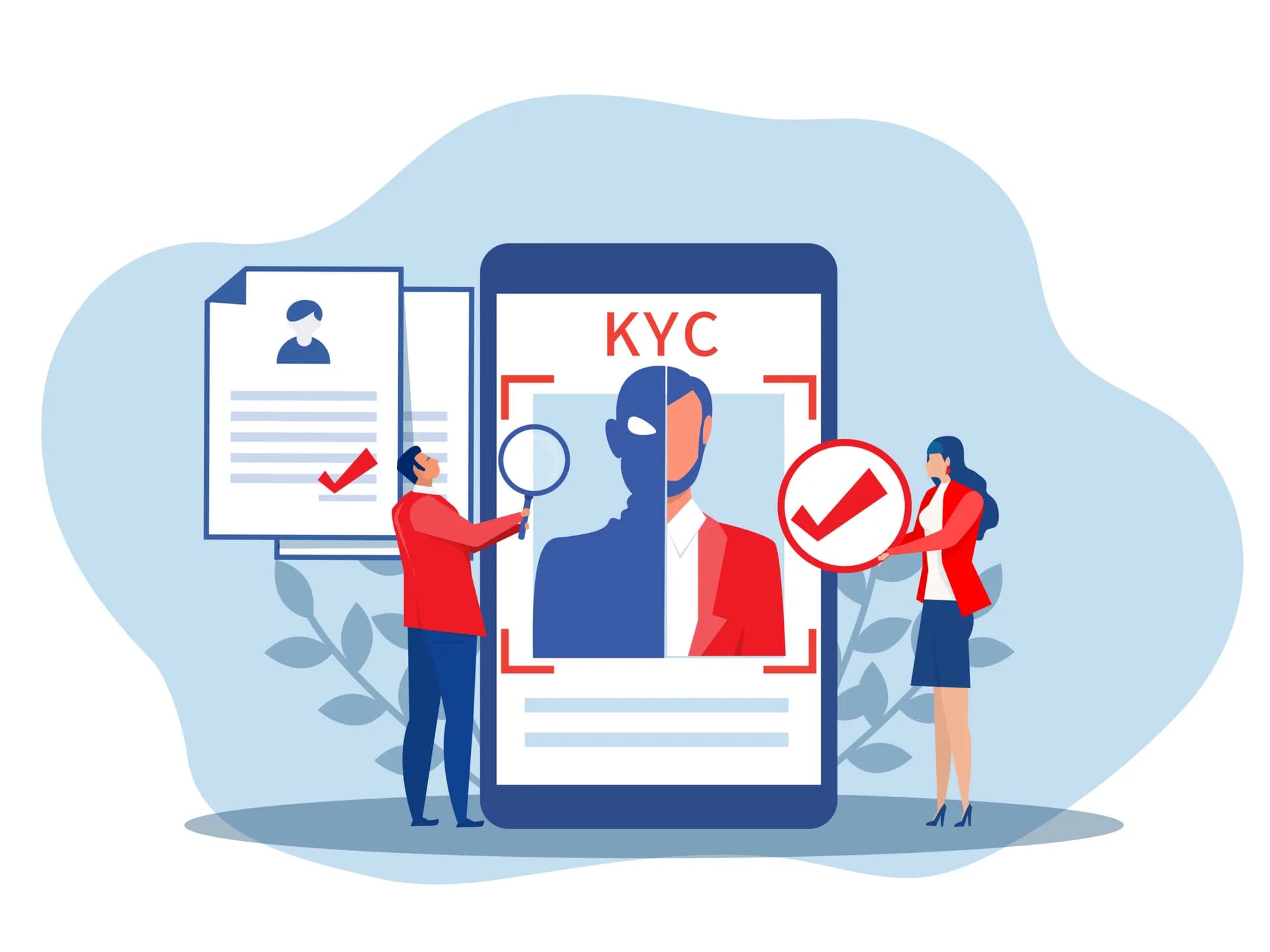
Before a client can work with a company, platform, financial institution, cryptocurrency exchange, or any other organization online, that organization has to identify the user. Trust on the internet starts with this step, and KYC is the procedure that performs it.
What is KYC
According to the financial portal Investopedia, KYC (Know Your Customer) is a set of regulatory and technological procedures that various organizations use to verify and confirm the identity of their clients, assess risk levels, and identify signs of suspicious activity. It is the primary tool for meeting regulatory requirements.
The same view is confirmed by Mike Slaugh, a leading information systems engineer at Amazon Business, in an interview for Identity Week:
Financial services, with their rigorous 'Know Your Customer' standards, offer valuable lessons for e-commerce. Borrowing those verification techniques can help Amazon and others better understand their customers, tailor experiences, and strengthen protection at scale
According to Mike Slaugh, Amazon treats authentication as a continuous process rather than a one-time event:
Everything begins with verifying the user's identity upon login, but risk assessment is conducted throughout the entire session, monitoring unusual behavior or signals to maintain constant confidence in the user's identity
Put simply, KYC is an ongoing process that helps a company answer one question: "Who is this person, and can we trust them?"
Primary Tasks of KYC Verification:
- Identification and verification of the client's identity based on their data
- Compliance with global regulatory requirements
- Reducing fraud risks
- Identifying potentially illegal transactions (money laundering, terrorism financing)
Types of KYC: Traditional, Electronic, and Hybrid
Organizations use KYC in three main formats, chosen according to the degree of risk and the regulatory requirements they face.
1. Traditional (Offline) KYC
Offline KYC is the basic identification model: the client comes to a company branch in person. An employee checks the documents by hand, asks questions, and fills in the forms.
Banks and other organizations with physical branches still use this format in part.
Advantages:
- The offline format shuts out modern fraud methods built on digital tools (deepfakes, document forgery through digital channels)
Disadvantages:
- Low scalability and high operational costs
- Inability to serve remote clients
- Lengthy application processing times
- Manual errors and rejection of applications that could have been approved
2. eKYC (Electronic KYC)
According to a Reconnaissance report, document protection is going through a revolution: people are moving from physical documents, such as banknotes and identity cards, to smartphones and electronic payment cards for financial transactions and as carriers of identification data. Traditional KYC has followed the same path and turned into eKYC, a fully automated digital version of the identification process in which the client is verified remotely through a mobile application or web platform.
eKYC is a way to implement KYC digitally with artificial intelligence and machine learning; it does not add a separate regulatory requirement. As Mike Slaugh, a leading information systems engineer at Amazon Business, notes, AI serves equally well for building attacks and for countering them. Amazon itself, according to Mike Slaugh, uses AI to detect anomalies in massive data sets and uncover fraud schemes.
Electronic KYC verification uses identity documents (ID cards, driver's licenses, etc.) and a selfie the user takes in real time. Online identification often includes a biometric check of the user's identity.
Advantages:
- Scalability: thousands of clients processed at the same time
- Availability 24/7 from any location with internet access
- Reduction of operational costs by 60-90%
- Minimal employee involvement, which means fewer manual errors and higher conversion rates
Disadvantages:
- Requires internet and smartphone access
- Without proper protection against modern attacks, an eKYC system can be exposed to digital fraud methods
3. Hybrid KYC
Hybrid KYC combines automated electronic systems with the manual checks of the traditional method.
Companies use it when the eKYC algorithm is unsure of its own result. The system and a compliance specialist then decide together: a qualified employee reviews the unusual case by hand and makes the final call.
Scenarios for applying the hybrid approach:
- The eKYC system returns a high-risk result (for example, the client is on a sanctions list)
- The user's "liveness" percentage is not sufficiently high (<95%)
- The document being checked is damaged, blurry, or contains additional elements
- And others
KYC Structure: Components of the System
A KYC system is a stack of interconnected technologies joined in one decision-making chain. Each one handles a specific part of processing client information.
1. Document Recognition and Verification Module (Document Recognition)

A KYC system starts with the module that recognizes and verifies documents. It includes the following elements:
- Mobile app camera: a dedicated interface for photographing documents, with hints that show the shooting area and check lighting and angle
- OCR (Optical Character Recognition): extracts text data (full name, date of birth, document series and number)
- Document validation: checks format, checksums, and compliance with ISO standards
- MRZ zone verification
2. Liveness Detection Module

Liveness detection relies on biometric verification and is one of the key stages of the system. It uses computer vision and machine learning to catch fraud and face substitution:
- Liveness Detection: confirms that a real person is in front of the screen, rather than a printed photo or a substituted image
- Anti-spoofing: protection against modern digital attacks (detects deepfakes, AI attacks, masks)
3. Face Comparison Module

This module compares the client's selfie with the photo in their document. It uses:
- Deep neural networks (Deep Learning) to create a biometric face fingerprint
- Similarity score calculation between two images
- Accounting for age changes, makeup, hairstyle, and shooting angle
Face verification can considerably cut fraud involving someone else's identity. Dating platform Tinder's first international trials of such a solution showed a 60% reduction in fraud risk. Yoel Roth, head of the Trust and Safety department at Match Group, Tinder's owner, reports:
Face Check is perhaps the most effective safety feature I've seen in my 15-year career
4. Sanctions Check Module (AML & CTF)

The module checks whether the client's data appear on sanctions lists:
- OFAC (Office of Foreign Assets Control): US sanctions list
- EU Consolidated List: European Union sanctions list
- Sanctions lists of other countries
- International List of Organizations and Individuals Involved in Terrorist Activity (Consolidated Sanctions List of the UN Security Council)
- Databases of fraudsters and cybercriminals, including proprietary databases/blacklists of financial institutions and others
5. Risk Scoring Module

The module calculates an overall risk rating from several factors:
- Geographic factors (country of origin, territory of residence)
- Client age and activity history
- Document quality and system confidence level
- Behavioral signals (unusual activity patterns, rapid registration of multiple accounts)
6. Transaction Activity Analysis

KYC keeps working after the client registers. Later on, the system rechecks user data at regular intervals. The need for this follow-up analysis is also described by Christina Hulka, Executive Director of the Secure Technology Alliance:
Identity leaders have spent the last few years redefining what 'sign-in' really means. Authentication is no longer a front-door step that happens once, then fades into the background. It is increasingly a continuous, context-aware decision that determines what a user can do and what an attacker can attempt.
That shift matters beyond the identity stack because the highest value actions in digital life are not logins. They are transactions. Adding a card to a wallet, initiating a pay-out, changing account details or approving a high-risk purchase all force the same question: do we trust this user enough to move value right now?
As part of ongoing monitoring, the system constantly analyzes:
- Atypical activity
- Changes in behavioral profile
- Connections with high-risk addresses
- Transaction splitting
- Geographic anomalies
This component works closely with AML monitoring systems.
KYC Limitations
KYC has limits that industry participants have to plan for. Depending on the provider and its capabilities, users may run into the following obstacles:
1. Technological Limitations
- Camera and internet quality: if KYC technologies are not adapted for weak devices, blurry photos, poor lighting, or slow networks can cause failed verifications
- Face recognition may work worse for certain ethnic groups if the algorithm was trained on imbalanced datasets. A National Institute of Standards and Technology (NIST) study found that face recognition accuracy can vary by user group
- Vulnerability to deepfakes and synthesized videos: eKYC technologies need well-built protection against modern attack methods
- Document format incompatibility: document recognition systems are trained on passports and driver's licenses from developed countries. If the provider's document database starts out small, documents from lesser-known territories may be processed incorrectly
2. Regulatory Limitations
- Different regulations in different countries: the provider has to adapt its technology to local laws in each country where its clients operate
- Consent requirements: the client must explicitly consent to the processing of biometric and personal data
3. Social and Ethical Limitations
- Financial exclusion: residents of some countries, developing ones in particular, lack current identification documents and so cannot access financial services
- Privacy and trust: clients worry about how their biometric data are collected and stored. A KYC provider's technology must comply with local personal data protection laws
4. Economic Limitations
- Operational costs of manual verification: even with automation, hybrid KYC needs at least a small team of experts for ambiguous cases
- Cost of false rejections: a badly designed system may turn away legitimate clients and cause reputational and economic losses
5. Operational Limitations
- Dependence on third parties: KYC is only as good as the providers you choose
- Lagging behind fraudsters: new fraud methods appear every day, so the provider has to keep adapting to new attacks
Conclusion
KYC protects the financial system and its participants. Moving from classical offline KYC to electronic and hybrid formats means balancing innovation, security, and accessibility.
No system is perfect. The limitations, from technological to ethical, call for a careful choice of provider, cooperation between regulators and industry, and investment in research.
When you choose a KYC provider, check how it deals with each of these limitations: weak devices, deepfakes, unfamiliar documents, local consent rules, and the cost of false rejections.
Ready to strengthen your customer checks?
500 free checks a month for a year · no card · no contract · no sales call.